
 Workshop
Decentralised Media Licensing
Create decentralised media licensing for the future of media production and re-use
Workshop Creators:
Institute for Design Informatics: Frances Liddell • Billy Dixon • Chris Elsden
Workshop Overview
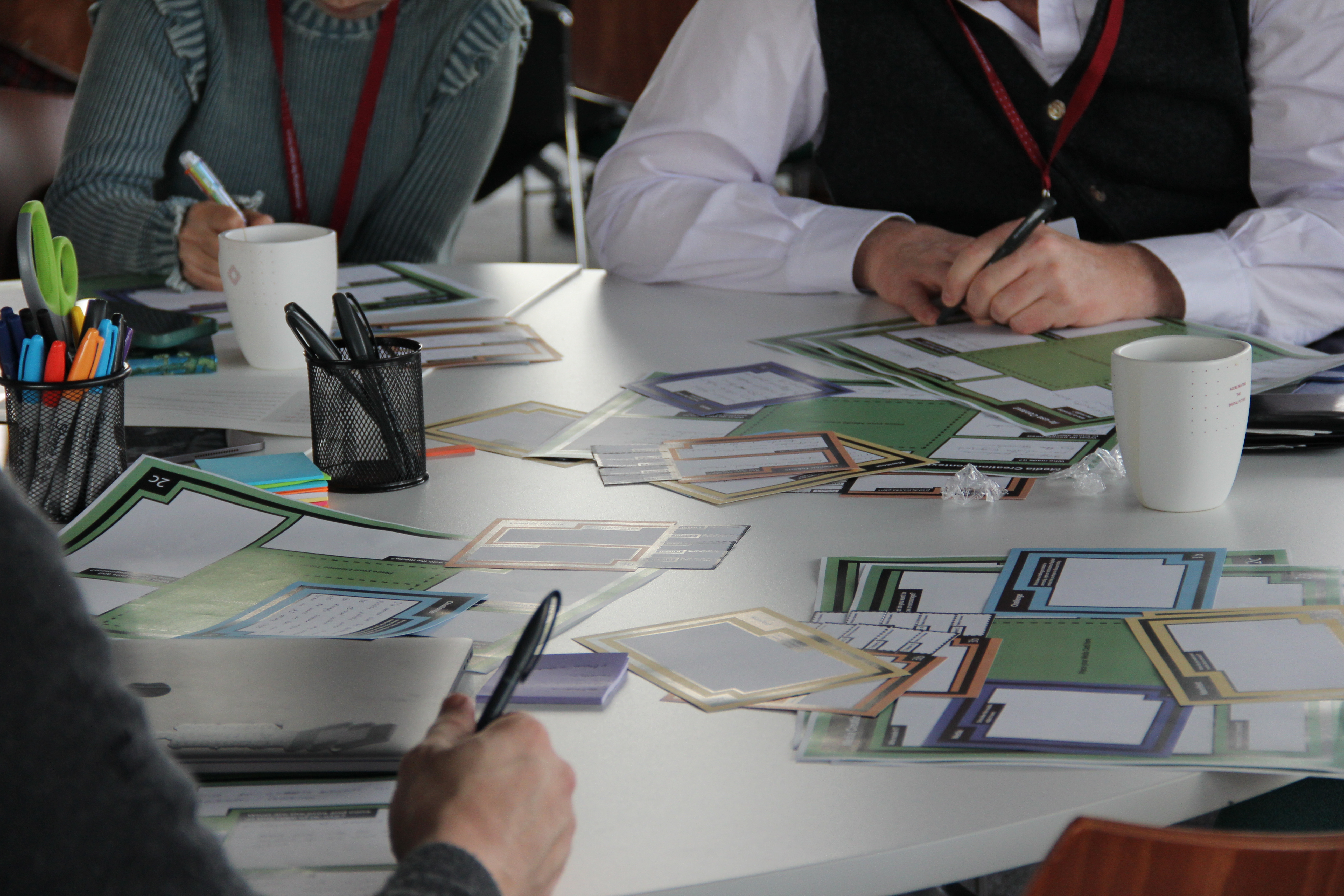
Whether you're sharing or selling media online, or interested in rights management, you want to explore new ways to guide, track and secure the onwards use of online media assets. This hands-on workshop introduces decentralised media licensing through 9 practical activities that guide you in using secure provenance data to create decentralised licences for media assets. You'll explore how decentralised technologies can transform relationships between creators and users in digital media ecosystems.
In this workshop you'll select a specific media asset and challenge, identify metadata and provenance information, and use this data to produce bespoke licence tokens that enable a new approach to attribution, ownership, and rights management that can better serve creators and users alike.
More About This Workshop
Global networks of social media platforms have enabled us to share media more widely than ever before. Access to a vast range of information and creative outputs has never been more extensive, and the potential for creatives to reach this audiences is far greater. This connectivity has reshaped the way that all digital media, including film, music, photography, and literature, is created and consumed. For people working in the creative industries this has brought creative opportunities, for example when producing collaborative or collective work that builds directly on work of others. It has also bought new opportunities and challenges to how creatives can build their reputation, and gain compensation. What this comes down to is oversight and control over onwards use. What makes social media platforms so powerful is the ease and speed with which media can be copied and shared, however in platforms media is often stripped of its metadata, containing vital information about the provenance, in this process.
This workshop explores the possibility of using decentralised technologies, such as NFTs and smart contracts, to support the creation of trusted, durable metadata directly embedded into digital media or content and creation and issue of bespoke licenses as tokens that stipulate the wishes of the creator and can be tracked to see how and when media or content is reused.
This workshop can help in a number of ways when managing media or content online. First, this workshop provides space to discuss metadata needs for digital media or content and the value this additional data can provide as media or content are disseminated online. Second, the workshop provides insight into the bespoke conditions and licensing that would be needed and relevant for media or content, specifically giving participants time to reflect on conditions that go beyond traditional legal frameworks such as creative commons licensing. Third, the workshop can pin down why decentralisation is valuable in these situations by enabling participants to walk through the process of creation and reuse of their media or content to decipher why tracking how content is reused might be valuable and what additional metadata and conditions would be needed to do so.
This workshop is for anyone involved in creating, re-using or distributing digital content across networks. Whether you currently face issues with re-use and consumption of your content or not, this workshop can help you consider how you could harness decentralised technologies to have more oversight of how your media is being used, and consider the potential effects that greater control through licensing might have. This workshop is particularly valuable for those who have an existing licensing challenge, as the workshop provides a framework to think through the problem and consider whether decentralised licensing could be an efficient way to address the challenge. It is also ideal in the early stages of a new project in new media or content is being publicised, and when new audiences are engaging, when it can be use this to think through what licensing and metadata you would need to support the goals of that project.
The workshop activities are designed to support individual work, and is ideal for people with similar interests to work through the process together. If you are coming to this as a team, you can begin working through activities individually, there is partner work and plenty of opportunity for discussion and for bringing thoughts and ideas together. People who are most likely to benefit from the workshop are those who best understand the media, and the goals of the project.
This workshop can be tailored to consider any type of digital asset that is shared online including data sets and computer code. However, it was originally designed to explore creative media, including digital art, film, music and digital twins of physical artworks, and so the language and activities are most appropriate for these contexts. We advise careful tailoring of materials when working outside of a creative media context.
This workshop can be run in a minimum of 2 hours, but has a number of optional steps that can extend the workshop to a half day.
As with all DSD Playbook workshops, this workshop does not explore or advise on which specific, current technologies will best suit the needs of your project. This workshop also does not offer legal advice and the "licensing" that is explored in the workshop is not legally binding. Though legal specifics could be added as a clause to these licenses, in which case we recommend legal advice to explore this implementation.
Getting Started
To begin the workshop, download the complete materials below. You'll need the slide deck to guide your session, worksheets for participant activities, and the facilitator handbook for detailed instructions.
You can also adapt this workshop for online delivery using Miro by downloading the PDF resources above and adding them to a Miro board. For more information, see the Running the Workshops Online section under Workshop Techniques on the Workshops page.
Workshop Activities
These activities will guide you in exploring and creating licenses for your media asset supported by decentralised technologies by:
- Defining your media and a related challenge
- Describing contexts of media creation, reuse and engagement
- Producing a 'manifest' containing metadata, and licence tokens for your media
- Considering re-use situations and engagement contexts to explore how licences play out
Browse through each of the 9 activities below to explore what's covered in the workshop. Click on any activity to view a detailed overview of the steps, objectives, and downloadable worksheets.
At the bottom of this page, you'll also find guidance on adapting the workshop for your specific context and integrating it with other workshops in the playbook.
Activity 1: Choose Media & Challenge
Begin by selecting a specific media asset that you are interested in exploring and identifying a challenge associated with sharing, reusing or licensing that asset.
Steps to complete:
- Choose your starting point: You can start with either the challenge or the media.
- Describe your media asset: The more specific the media description, the better. Describe the constituent parts of the asset, what does it consist of?
-
Consider your challenges: What are your most problematic challenges? What do you want to address? Consider both creation and distribution challenges. Here are some examples to get you thinking:
- You're a content creator and sharing content on social media is how you make money but you want to stop others from taking and posting your content as their own.
- You have created a deepfake of yourself and you want to limit how companies can license and use it.
- You wish to license a stem from a music track as part of a new remix, but there are multiple rights holders to seek permission from.
- Summarise: Capture your starting point - asset, challenge or both - on one sticky note to take forwards.
Activity worksheet:
Activity 2: Media Creation Context
Describe how your chosen media is typically created. By identifying the creation context of your media, you are identifying the key components of the media/content's metadata, which can be used as part of the provenance data and helps to inform what kind of licensing you might wish to apply.
Steps to complete:
- Describe how your asset is created: PPlace your media asset in the centre of Activity 2 sheet, and complete the sheet using the provided prompts.
- Discussion: For 5 minutes, find another person to exchange ideas with and use Activity 2 sheet to briefly introduce your media and challenge.
Consider:
- Who creates this media?
- What tools and materials are involved?
- What is the typical workflow?
- Who are the stakeholders in the creation process?
Activity worksheet:
Activity 3: Manifest File
A manifest file for a digital asset describes its structure, format and content. It includes metadata about the file, such as about how it was generated and what transformations it has undergone. This embeds provenance data directly into the media file, creating an immutable record of its origin and creation, which can be used as part of digital rights management.
Define what metadata could be contained in the manifest file for your media using the creation context as a guide.
Steps to complete:
-
Reflect on Creation: Consider how your media is created and complete Activity 3. Examples of possible data for your manifest:
- Title of work (file name)
- Date created
- Date manipulated
- Device/hardware used
- Software used
- Software required for interaction
- GPS Coordinates
- Filters applied
Remember:
- The manifest captures provenance—where did this media come from?
- You can also consider the media content, for example, subjects in an image, or identities of voices in an audio recording
- Think about what information would be valuable for future users or re-users
- This data cannot be easily stripped or removed from the file, consider if any of this information could become problematic in the future
Activity Worksheet:
Activity 4: Creating Decentralised Licence Tokens
Design the licence tokens that could be issued for your media. These tokens represent bespoke, highly specific rights that govern how your media can be used, remixed, or commercialised, and can enable you to control and track onwards use of your media online.
Steps to complete:
- Re-use practices: Imagine what do you want others to do with your media, or specific practices you wish to discourage or limit.
-
Conditions of use: In what conditions you would you like to people to use your media? Are there limits on the type of uses you would like to encourage? For example:
- Would you like to encourage more remix, but want to limit the use of this to specific types of use, i.e. educational, non-commercial
- Would like to encourage reuse but have a time restriction in place to create a buzz → 'must be used by'
- Would like to encourage engagement but embed geographical restrictions → 'only used in UK'
- You want to be paid a revenue for commercial use and define payment for each time your asset appears as part of a social media feed.
- Create licence tokens: Reflect on your answers to questions 1 and 2 and consider how they can be formalised as rules and clauses. E.g. create restrictions like a time limit or "UK only". Record these as licence tokens on sticky notes and stack them in the centre of Activity sheet 4.
Key Considerations:
- License tokens are programmable and machine-readable
- They can represent very specific, bespoke licensing arrangements
- Think about both what you want to enable and what you want to restrict
- Consider how tokens might represent royalties or other forms of value exchange
Activity Worksheet:
Activity 5: Reuse Media Creation Context
Consider how your media may be adopted and reused by others by working with a partner to discuss how they might reuse your media and vice versa.
Understanding reuse patterns helps you design license tokens that enable valuable secondary uses while protecting creator rights.
Steps to complete:
- Find a partner reflect on how you could reuse each other's media based on the current licence tokens.
-
Take your partners asset and place them in the centre of your Activity Sheet 5. Follow and complete the prompts in the reuse context to consider:
- Who might want to reuse this media?
- How might they want to transform or adapt it?
- What value could reuse create?
- What concerns exist around unauthorizsed reuse?
- Take the tokens from your partner's Activity Sheet 4 that allow you to reuse that media and place this below their media asset.
Reuse Examples:
- Remixing music tracks into new compositions
- Incorporating images into larger artworks
- Sampling video clips for educational content
- Translating or adapting written works
Activity Worksheet:
Activity 6: Update Manifest
When a media asset is reused, new provenance data is added to the manifest file. This is an opportunity to consider new data that could be recorded for this particular re-use, and means that onwards use of the asset can be tracked.
Steps to complete:
- Continuing to work with the reuse of your partner's asset, take your partners' manifest file (Activity Sheet 3 and 6) to add new provenance data.
-
Follow prompts on the Activity 6 section to consider what could now be included in a manifest for the reused media:
- Original source attribution
- License acquired
- Modifications made
- New creation metadata
Key Concepts:
- Each reuse creates a new layer of provenance data
- The complete lineage of the media can be tracked through the manifest files
- Attribution is preserved through the entire chain
Activity Worksheet:
Activity 7: Re-use Tokens
To complete the full cycle of license acquisition, manifest updating, and new licence issuance, consider and define new licence tokens for the reuse media. New licence tokens can build upon or modify existing licences.
Steps to Complete:
- Take your partners Activity Sheet 4, and fill in Activity 7 using the prompts to consider reuse practices and permissions.
- Create new licence tokens for your reuse media asset.
Reflection:
Activity Worksheet:
Activity 8: Media Engagement Context (Optional)
Explore how your media may ultimately be engaged with by other users, considering ways users might access or experience your media that isn't direct reuse.
Understanding engagement patterns helps complete the picture in how you might wish to license your work.
You can either use your original media, or the re-used media you have created from your partners' work.
Describing engagement:
-
Place your media asset in the centre of Activity Sheet 8, and complete. Consider engagement scenarios:
- Who would wish to experience this media and how?
- How do they discover and access the media?
- What value does that engagement offer?
- How might engagement data feed back to creators?
Engagement vs. Reuse:
- Engagement is about consumption and experience, not creation
- Consider passive engagement (viewing, listening) and active engagement (sharing, commenting)
- Think about how decentralised licensing might enable new forms of engagement
Activity Worksheet:
Activity 9: Putting It All Together (Discussion)
Synthesise your work by creating a narrative use case that demonstrates how decentralised licensing addresses your chosen challenge.
Steps to Complete:
- Form groups: On your table in groups of 4 - 6, arrange your individual Activity Sheets to tell your complete story.
-
Walkthrough your use case: Each person in the group uses their Activity Sheets to walkthrough and reflect on their use case with the others in the group.
- Try to tell a story of media creation, reuse and engagement
- Reflect on how decentralised licensing may (or may not) address your challenge
- Identify opportunities for unexpected value creation
- As a group, help critique and improve each use case
Critical Reflection:
- Consider technical, social, and legal implications
- Reflect on how decentralised licensing extends, contradicts or relies upon existing means of rights management.
Workshop Outcomes
ORA is an adaptable technical framework that can be implemented in many ways to support new forms of ownership, licensing and attribution.
By working through the activities in this workshop, you will have explored how ORA can be used to create bespoke, programmable licenses for digital media assets, and how these licenses can be tracked and enforced through manifest files. You will have considered how decentralised licensing can enable new forms of media reuse and engagement, while preserving creator rights and attribution.
Make It Your Own
The Decentralised Media Licensing workshop is designed to be adapted for different media types, creative sectors, and organizational contexts. Whether you work in music, visual arts, journalism, film, gaming, or any other creative field, the activities can be tailored to your specific needs and challenges.
You can adjust the workshop duration by focusing on the most relevant activities for your group. For instance, if your participants already have strong familiarity with digital rights management, you might spend less time on foundational concepts and more time on the ORA-specific activities (Activities 3, 4, and 6).
The workshop materials are fully customizable to match your brand and context. Modify the worksheets to include examples from your sector, adjust terminology to match your audience's language, and add supplementary materials that connect ORA to your specific regulatory or business environment.
Consider running this workshop alongside or after the DSD Fundamentals workshop to provide participants with both broad ecosystem thinking and specific technical implementation strategies. The combination helps teams understand both the strategic potential and practical applications of decentralised service design.
Share Your Experience
Have you used this workshop? We'd love to hear how it went and learn from your experience.
Get in Touch