
 Workshop
BlockExchange
Role-play peer-to-peer trading on the Blockchain
Workshop Creators:
Institute for Design Informatics: Chris Speed • Debbie Maxwell • Ella Tallyn | Independent: Dug Campbell
Workshop Overview
BlockExchange is a face-paced, interactive game-like experience designed to help people understand the basics of blockchain and experience decentralised, peer to peer trading. Through hands-on trading rounds, participants experience firsthand how blockchain can create transparent, trustless transactions without centralised control.
The workshop uses a physical card-trading activity to demonstrate core blockchain concepts including public ledgers and consensus mechanisms. Players trade cards representing different resources through three rounds, starting with simple resource acquisition, through market forces, and finally exploring the new possibilities and boundaries of decentralised peer-to-peer trading.
This interactive format makes abstract blockchain concepts tangible and accessible, helping participants understand and experience the social implications of decentralised systems.
More About This Workshop
Public awareness of Bitcoin and Blockchain rose rapidly in 2015 and 2016. This was a time when traditional "push" economies—linear value chains that governed consumption—were being disrupted by platform or "pull" economies, where consumers take an active part in shaping services. The emergence of Bitcoin offered a radical alternative to both financial power structures and emerging platform economics.
BlockExchange was created over 10 years ago as a response to the emergence of DLTs, with the aim of engage diverse stakeholders in understanding this complex technology. It is the earliest of the DSD workshops, and in these early years was run more often than any other workshop (around 30 deployments that we know of), with a wide range of diverse organisations.
In the intervening years, cryptocurrencies have largely been used for speculation. The absence of central authority, combined with privacy-preserving capacity, has often created spaces for exploitation by bad actors, leading to negative perceptions of the technology. However, the potential for positive use remains. BlockExchange provides a space to look past these perceptions and investigate how DLT can support incumbent financial systems, supply chains, and social change.
The Power of "Defamiliarisation"
BlockExchange brings our current exchange methods to the fore through a process of "defamiliarisation." By taking the exchange methods we usually take for granted and exposing them as if they were new, participants are given the opportunity to reconsider the dynamics and nature of money and trade.
The workshop progresses through three rounds:
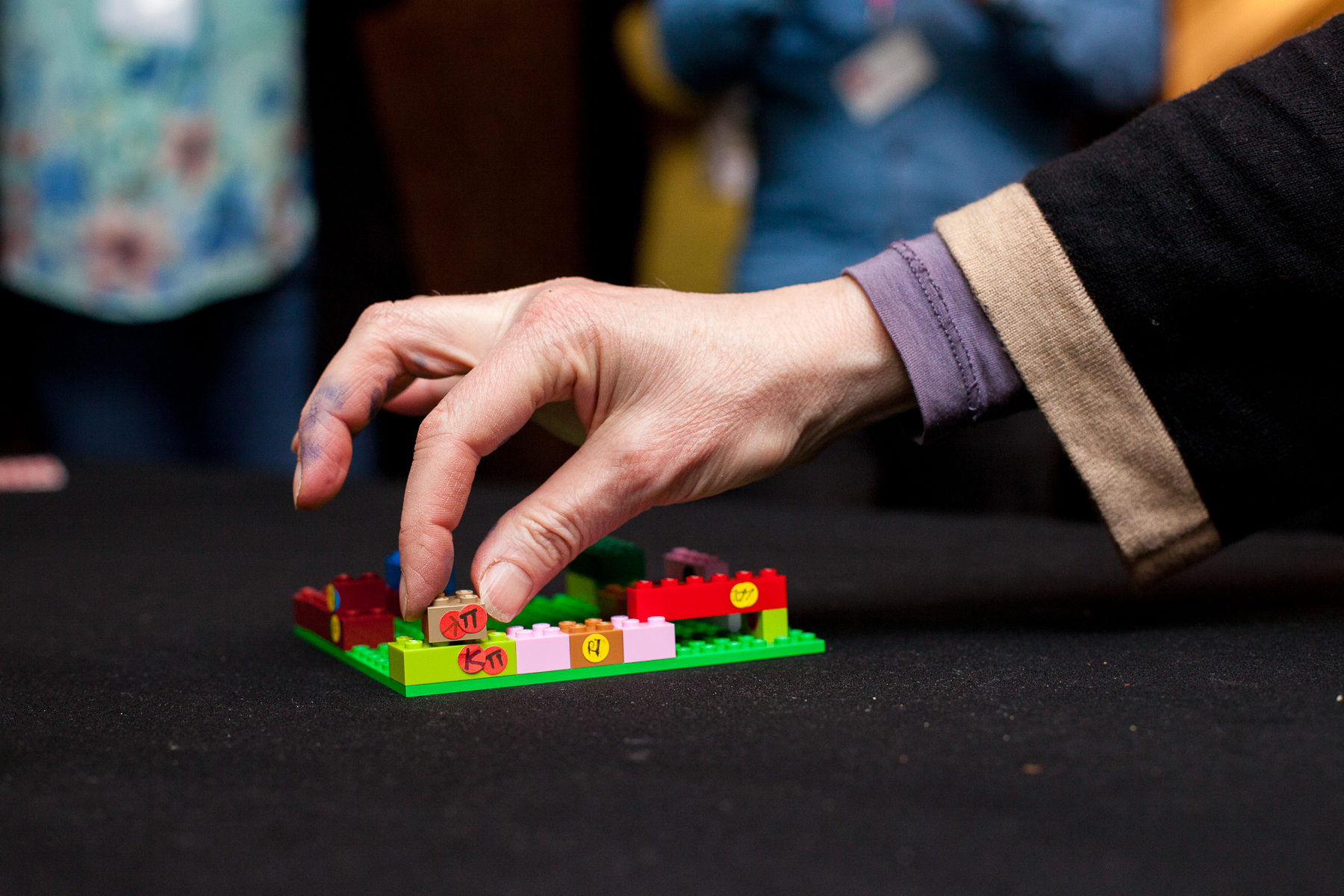
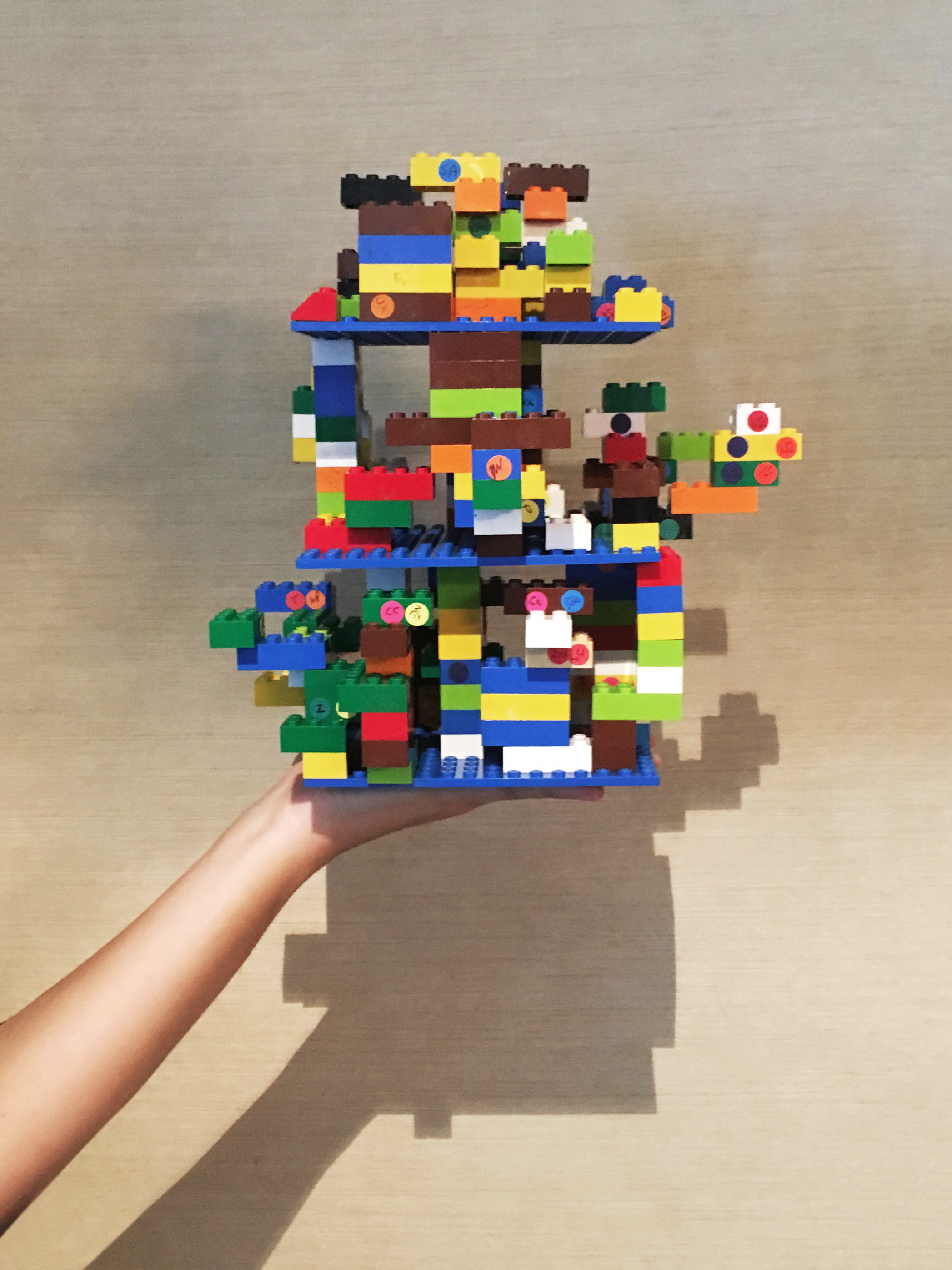
- Round 1: The Initial Ledger. Participants start with a "lopsided" hand (e.g., three of two types of resources) and a basic goal: diversify. Every trade is recorded by adding a Lego brick to the "chain," marked with the initials of the traders. This creates a tangible, physical representation of the digital ledger.
- Round 2: Strategic Shocks. Facilitators act as external disruptors, arbitrarily changing the value of resources (e.g., "Wood is now worth three blocks; Oil is worth eight"). Participants must move beyond simple bartering to game the system, developing strategies to protect their resources in a fluctuating market.
- Round 3: Radical Autonomy (The "Rug Pull"). In a moment of shock, all resource cards are removed. Participants are told to trade anything they agree has value. This highlights the potentially libertarian nature of DLT: without a prescribed system holding your hand, you must define your own assets and negotiate your own trust.
Who Should Participate
The physical, playful nature of the activity breaks down barriers for non-technical stakeholders. It creates a shared foundation of understanding before diving into more complex topics.
- For Technical Participants: Those skilled in technology benefit by opening up new ideas on the nature of value. Their expertise enhances the group experience by grounding playful speculation in technical reality.
- Shared Mental Models: The workshop is ideal for teams at the start of a project, establishing a common vocabulary and shared mental models. Alternatively, it can be used more critically to explore ecosystems already supported by P2P interactions.
Logistics & Scalability
- Group Size: Designed for a minimum of 15 people to ensure enough trading opportunities; it works best with 30–50. It is highly scalable and has been successfully run with groups of over 100 in conference settings.
- Duration: Typically 1–3 hours. The core trading rounds take 45–60 minutes, with the remaining time used for setup, reflection, and strategic discussion.
- Adaptability: The workshop is easy to tailor, see the Make it Your Own section below.
Facilitators can create resource cards specific to their project or substitute Lego for other materials that may be more manageble or appropriate for the specific context.
Relation to the Playbook
BlockExchange provides the experiential grounding needed for the rest of the DSD journey.
Run before DSD Fundamentals to give participants an intuitive understanding of blockchain basics.
Follow with If This Then What? to move from the experience of trading to the logic of automating those trades via smart contracts.
What's Not in Scope?
As with all DSD workshops, BlockExchange does not teach or advise on technological specifics. It will not help you choose a specific commercial platform or write code; it is a vital logical and experiential bridge to help you understand the "why" of decentralisation before the "how."
Getting Started
To run the BlockExchange workshop, download the game materials below. You'll need to print the trading cards and prepare the venue according to the setup guidance provided in the facilitator materials.
You can also adapt this workshop for online delivery using Miro by downloading the PDF resources above and adding them to a Miro board. For more information, see the Running the Workshops Online section under Workshop Techniques on the Workshops page.
Preview Workshop Activities
Browse through each of the 6 activity steps below to explore the workshop content and structure. The first three activities are trading rounds that progressively explore the possibilities of peer-to-peer trading, followed by a group discussion and an optional extension activity for exploring decentralised trading in new concepts and designs.
At the bottom of this page, you'll also find guidance on adapting the workshop for your specific context, using the workshop in different ways and integrating it with other workshops in the playbook.
Pre Game: Getting Set Up
Block Exchange is played across 3 rounds in which participants engage in peer-to-peer trading, using Lego bricks to exchange and record their transactions on the Lego ledger.
Getting Started
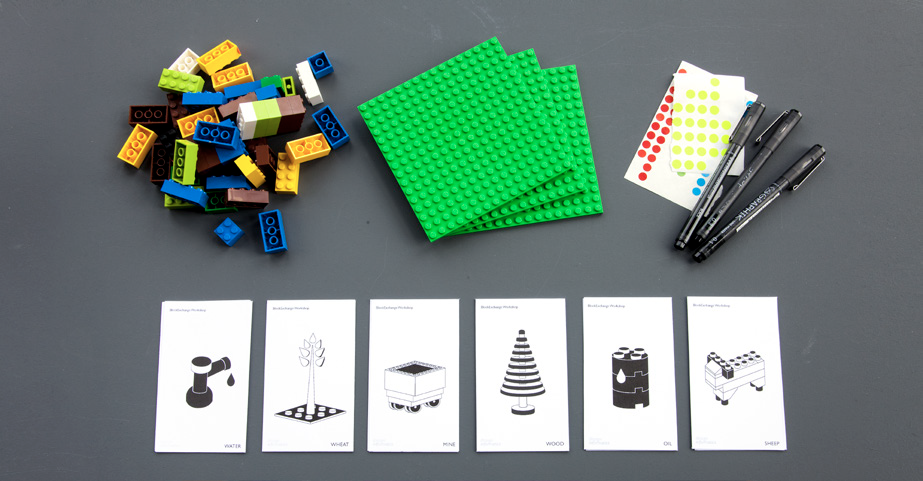
To get started, each participant is given 6 resource cards, 3 each of 2 different resources, and 10 Lego bricks. On the table they should also have access to pens and small stickers that fit on the Lego bricks. A Lego base plate should be placed somewhere that everyone can easily see and access.
Role-Playing A Trade:
It's key that everyone knows how to make a trade with another participant and record it on the Lego ledger. The best way to get this going is for the facilitators to role-play a trade.
Setting Up The Miners:
The miners in the workshop represent cryptocurrency miners who perform the consensus work on a distributed ledger.
In cryptocurrencies, such as Bitcoin, miners audit the transactions, create the blocks and then perform complex, energy intensive problem solving to encrypt and seal each block. This process makes it almost impossible to alter a block once it has been made. In the case of the Bitcoin network miners are paid in Bitcoin for this work, which releases new currency into the network in a controlled way.
For this workshop, 3 participants must volunteer in each round to act as miners for the Lego ledger. The miners work individually in competition with each other to solve simple number puzzles as quickly as possible. This represents the proof of work process performed in Blockchain networks. The fastest miner to solve the puzzles will win 25 Lego bricks, which they can use in the next round.
Ready To Play!
Round 1: Start Trading!
The first round introduces participants to the basic mechanics of the Block Exchange activity. Players learn how to negotiate trades, record transactions, and build awareness of the public ledger. The aim of this round is for participants to try and get a more diverse set of resources.
How It Works:
- Timing: The round begins with the miners starting on their number puzzles.
- Trading Begins: Participants move around the room freely, approaching others to propose trades. Participants negotiate which cards to trade. In this round each resource card is worth 1 Lego brick.
- Recording Trades: When two players agree on a trade, they must record this by each adding their initials to a sticker and sticking this to the Lego brick that has been traded. This brick is affixed to the Lego base plate, representing the public ledger. The participant who gained the Lego brick then takes a replacement brick so that it can be traded again.
- Continue Trading: The round continues until one of the miners has solved the number puzzle, around 10-15 minutes.
- End of Round: to close the winning miner is awarded 25 Lego blocks, and all miners return to the group. The Lego ledger is sealed with another baseplate.
Learning Objectives:
- Experience how decentralised trading works without a central authority
- Understand the role of miners in sealing the block
- See how the public ledger creates transparency and trust
- Recognise that all transactions are permanent and visible to everyone
Round 2: Market Disruption
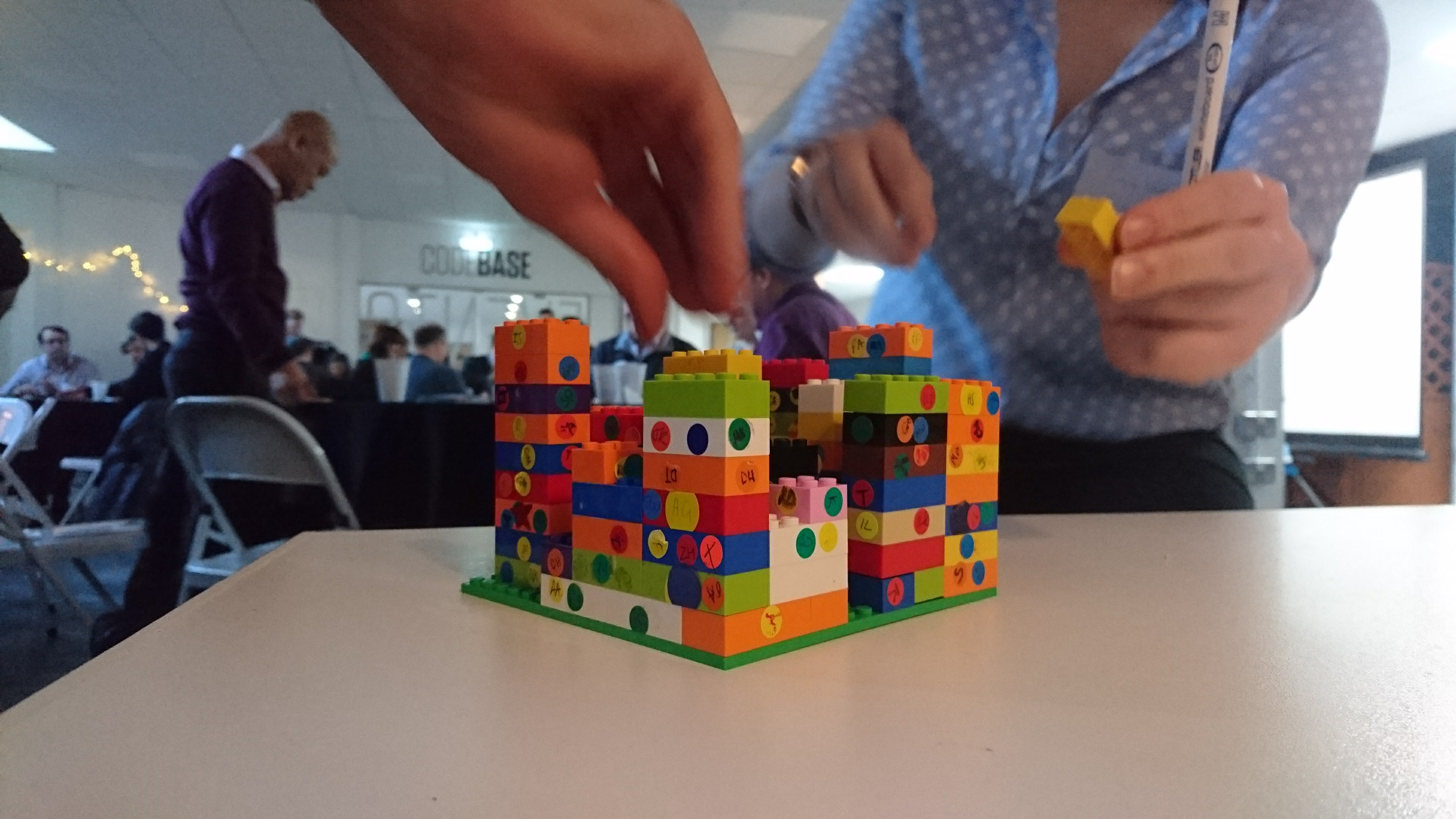
In the second round, the activity is similar to the previous round, and participants are again given the goal of gaining a diverse set of resources. However, in this round the facilitator introduces a disruptive element to demonstrate how external changes affect trading ecosystems. This could be new rules, scarcity, value shifts, or other market forces that can alter trading behaviors.
How It Works:
- Assign New Miners: A new set of miners get ready for Round 2. They begin their number puzzles and trading starts!
-
Introduce Disruption: The facilitator announces a significant change to the trading environment. Examples include:
- Certain cards suddenly become much more valuable or less valuable
- New scarcity constraints (some card types can no longer be traded)
- Adapt and Trade: Participants may start to adapt their trading strategies to the new conditions. They negotiate trades under the new rules while continuing to record all transactions, by placing Lego bricks on top of the second base plate or the Lego ledger.
- Observe Behavioral Changes: Participants may start to adapt their goals. Do they try to hoard certain cards? Do new coalitions form? Does the ledger reflect these changes?
- Round Duration: The round ends when one miner completes their puzzle, which again should be around 10-15mins.
Learning Objectives:
- Experience how external market forces change trading behaviour
- Observe how scarcity and value perception affect trading dynamics
- Is this different to centralised markets run on fiat currency?
- Recognise that the ledger captures the entire evolution of the system
Round 3: Trade Anything
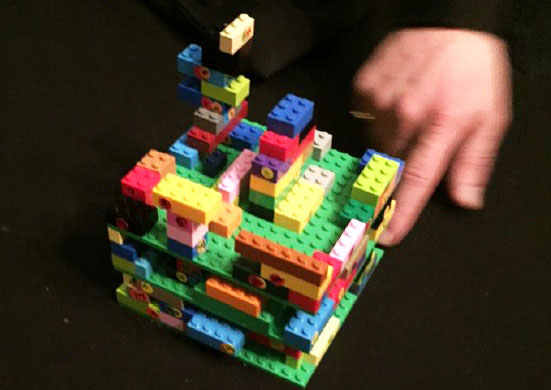
The final trading round allows participants to trade not just cards but anything they can agree upon—promises, services, future commitments, or even abstract concepts. This demonstrates how blockchain can enable truly decentralised, peer-to-peer value exchange beyond traditional assets.
How It Works:
-
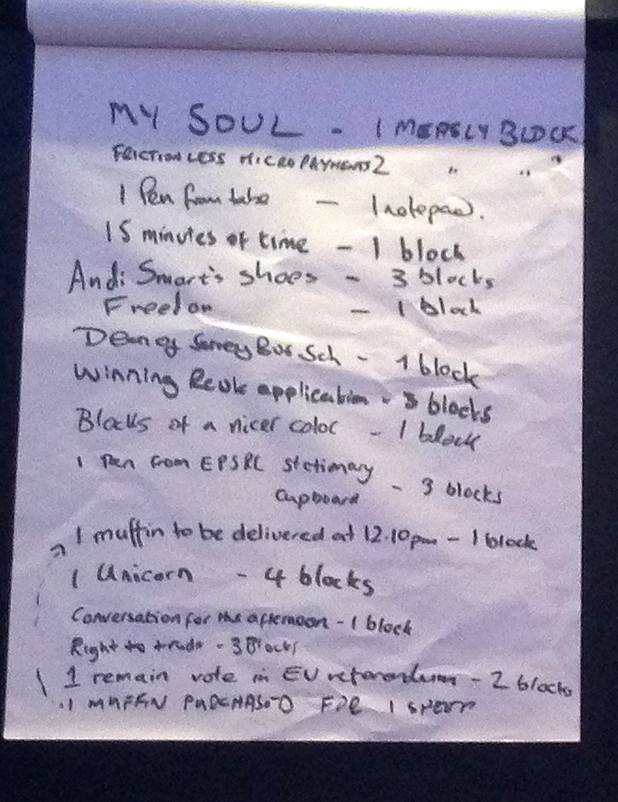
Remove Restrictions: The facilitator announces that players can now trade anything they want, not just the physical cards. This could include:
- Promises ("I'll help you with X later")
- Services ("I'll give you a 5-minute back massage")
- Information ("I'll tell you who has the blue cards")
- Future commitments ("I owe you a favor")
- Any amount of blocks can be exchanged, participants have the fun of deciding what they are worth
- Creative Trading: Players negotiate creative exchanges that go beyond simple card swaps. The key is that both parties must agree on what's being exchanged.
- Record Everything: In addition to recording the exchanges on the Lego ledger, in this round we also recommend writing the trades up on a board, so it is easy to see what is being exchanged. This creates a fascinating record of how people value different types of exchanges.
- Observe Complexity: What is being discussed in negotiations? How do participants think about promises that should be kept? What happens when trades involve future events, can these be verified?
- Round Duration: As before this round is timed by miner activity, for around 10-15 minutes.
Learning Objectives:
- Understand that blockchain can record any type of value exchange, not just financial transactions
- Experience the challenges of trading intangible or future-based assets
- Recognise the importance of clear terms and mutual agreement in decentralised systems
- See how creative participants become when given freedom to define value
- Understand the limitations of recording and enforcing certain types of agreements
Discussion: Pull Together Thoughts & Developing Ideas
After the trading rounds, gather all participants for a facilitated discussion to reflect on their experiences, connect the activity process to real blockchain concepts, and explore implications for real-world applications.
Discussion Structure:
-
Summarise the Experience (10 minutes):
- Ask participants to share their immediate reactions and observations
- Review the public ledger together, pointing out interesting patterns
- Highlight key moments from each round when behaviours changed
-
Connect to Blockchain Concepts (15 minutes):
- Distributed Ledger: How did the public ledger function like a blockchain? What made it trustworthy?
- Miners: What role did miners play? How is this similar/different from cryptocurrency mining?
- Transparency: How did knowing all transactions were public affect your behaviour?
- Consensus: How did value change across rounds?
- Automation: What payments and agreements could be automated, what implications might this have?
-
Explore Real-World Implications (15 minutes):
- What did this experience reveal about trust in decentralised systems?
- Where might blockchain be useful in your field or industry?
- What advantages do decentralised system offer? What limitations?
- How might the abstract trades in Round 3 apply to real-world contracts or agreements?
Optional: Explore New Designs & Concepts
This optional extension activity invites participants to apply their blockchain understanding to design new systems, services, or applications. It's ideal for groups who want to move from understanding blockchain basics to imagining practical implementations.
Extension Activity Options:
Choose one or more of these activities based on your time, group interests, and learning objectives:
Option 1: Design a Blockchain Application
Participants work in groups to come up with new applications, and consider questions such as:
- What problem does it solve?
- Who are the key actors/users?
- What challenges or limitations might this have?
Option 2: Redesign BlockExchange
This activity can be done in groups or collectively. This is useful if the workshop is intended to help participants understand the mechanics and dynamics of DLTs.
Participants can discuss what worked well and what could be improved in the BlockExchange workshop activity itself. Changes to the game might include rules that would:
- Better simulate specific blockchain features (e.g., proof of work, proof of stake)
- Address different sectors or use cases (e.g., supply chain, identity verification)
- Use the ledger in new, creative ways
Option 3: Critical Analysis
This option may be appropriate for learning environments, where participants can work in small groups or collectively, to explore:
- What problems is blockchain genuinely good at solving?
- When is centralisation actually better?
- What are the environmental, social, and economic costs of using blockchain?
- Who benefits from blockchain? Who might be excluded?
- What power dynamics does blockchain change or maintain?
- Where or to whom does trust move to?
Workshop Outcomes
By taking part in BlockExchange, participants gain an experiential and intuitive understanding of how blockchain and distributed ledger technologies work — without needing any technical background. The trading rounds make abstract concepts such as public ledgers, consensus mechanisms, and peer-to-peer exchange tangible and memorable.
Through the three rounds, participants directly experience how decentralised systems handle value exchange, how market forces and external disruption shape trading behaviour, and how the absence of a central authority changes the dynamics of trust and negotiation.
The discussion and optional extension activities help participants connect their experience to real-world applications, identify where blockchain may or may not be appropriate in their own context, and begin to think critically about the social, economic, and environmental implications of decentralised systems.
BlockExchange is particularly effective as a shared starting point for a team or group. Participants leave with a common vocabulary and a grounded, felt understanding of decentralisation that supports richer conversations in subsequent workshops or project discussions.
Make It Your Own
BlockExchange is highly adaptable to different contexts and learning objectives. It works particularly well as an icebreaker to precede a more in-depth activity, such as one of the other workshops, providing participants with the opportunity to learn more about what a DLT is while interacting with their peers.
To adapt the workshop you can modify the card types to represent resources specific to your industry or organisation, such as data, digital content, or assets in supply chains. In this case you might want to spend more time on Rounds 1 and 2, focussing on trading specific resources, and skip Round 3, and you could adjust the disruptions in Round 2 to explore particular challenges your sector faces. By using materials such as Lego to represent transactions, BlockExchange can be a useful way to visualise transactions that are already taking place within your service or organisation and you can provide space in the workshop to critically reflect on the impact of making these publicly available.
For groups already familiar with blockchain basics, you can skip the introductory explanations and jump straight into the trading activity. Conversely, for complete beginners, you might want to add more time for discussion and explanation of technology between rounds.
Share Your Experience
Have you run BlockExchange with your group? We'd love to hear how it went and what you learned.
Get in Touch